
About Martineau & Associates
We design a new class of computer-vision instruments for understanding complex animal behavior. Our core competency is inventing novel imaging paradigms, notably Remanent Imaging, and reducing them to practice for continuous, quantitative monitoring of aquatic organisms.

Pierre René Martineau, Ph.D.
President, founder and co-owner
I founded Martineau & Associates in the early 1990 as a management consulting boutique focusing on emerging computing technologies. In 2005, seizing an opportunity to pursue my lifelong interest in animal behavior research, I became an inventor of a new type of computer vision instrument to understand complex animal behavior. Since then, I conducted basic and applied research in computational ethology and became a pioneer in zebrafish behavior monitoring and computer vision for motion understanding. While shifting my company's focus, I obtained funding from a world-renowned medical foundation, later from the National Institute of Mental Health (NIMH), and most recently from the Office of the Director of the National Institutes of Health (NIH). The opportunity to tackle the notoriously hard problem of video monitoring groups of transparent zebrafish larvae in a Petri dish brought me early and consistent success. Based on mathematically rooted yet simple ideas, I conceived a new imaging paradigm ("Remanent Imaging") and designed a new monitoring system that proved capable of solving the problem; this system evolved into our MagnaTank flagship behavior monitoring platform. My background is broad; my formal education in France at Ecole Polytechnique and Sorbonne University Pierre and Marie Curie focused on Math, Physics, Computer Science, and Life Science Complexity. My career spanned software engineering, research and general management, technology consulting, management consulting, and large-scale business development. Most recently, I returned to software programming, hardware prototyping, and basic research. I have the good fortune of having worked alongside outstanding scientists such as Dr. Emmanuel Mignot, Dr. Philippe Mourrain, and Dr. Louis C. Leung. I am thrilled and honored that Louis joined my company three years ago, and since then we have been hard at work bringing my design ideas and prototype systems to market.

Nidhi Raghavendra
Senior Software Engineer
As a software engineer with a master’s degree in information systems and management from Northeastern University and a bachelor's degree in computer science, I bring a comprehensive background in full-stack web development, backend engineering, database architecture, and scalable cloud systems to Martineau & Associates. Over the course of my career, I have driven complex technical initiatives for industry-leading enterprise clients, mentoring cross-functional teams to deliver high-impact software solutions that generated significant revenue and earned direct commendation from executive leadership. I am thrilled to join Martineau & Associates and apply my technical skills to advance our understanding of the living world. I am particularly energized by the company's decade-long strides in zebrafish (Danio rerio) research, including Remanent Imaging—a groundbreaking video imaging paradigm for motion quantification—and the Zebratrack prototype, a high-throughput behavior monitoring platform for aquatic organisms. Practicing Agile methodologies with a customer-centric focus, I design and build software systems that accelerate medical research and drug discovery. I look forward to combining my engineering capabilities with my leadership experience mentoring 300+ students as a Lead Graduate Teaching Assistant for Java Application Engineering to help drive the company's scientific mission forward.
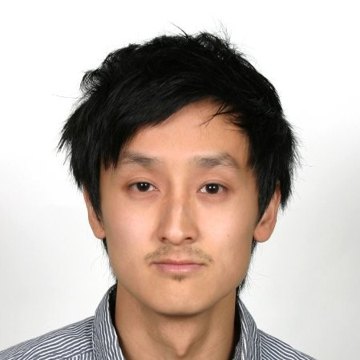
Louis C. Leung, Ph.D.
Advisor, Science and Software Engineering
I am excited to have joined Martineau & Associates to contribute my accumulated skills in neuroscience research, state-of-the-art imaging techniques, zebrafish, and software engineering to the company's groundbreaking work in Remanent Imaging applied to computational ethology. My current mission is to bring a new generation of zebrafish ethological devices to market. My education and scientific training have been driven by my fascination with neuroscience. My Ph.D. work focused on the mechanism of how the nervous system builds itself using, among other techniques, the live imaging of retinal axon pathfinding through the diencephalon. In a short stint at the Max Planck Institute, Dresden, I made my transition to zebrafish with which I work now; there, I used primarily live imaging methods to examine dynamic regulation of nuclear motion. My work at Stanford brought together my live imaging experience with moving focus from the development to the function of the nervous system. There, I built tools for whole-brain calcium imaging to redefine the sleep state in vertebrates. In this work, published in Nature, I designed and performed multiple behavioral actimetry experiments with zebrafish and gained wide familiarity with available tools to perform fish behavior monitoring. As a key contributor at Martineau & Associates, I draw on my sleep and neuroscience expertise, my talents at developing software and prototyping hardware, and my lifelong fascination with neuroscience and ethology. In addition, it exposes me to the professional business environment of a research- and technology-focused Silicon Valley operation.
From consulting to imaging
Martineau & Associates was founded in 1991 as a technology and management-consulting practice. Through 2006 it helped launch ventures that included PosteCS™, the first global secure Internet document-delivery service, a commercial service of the US, Canadian and French postal services.
In 2006 the company refocused on research and development in behavioral monitoring of aquatic organisms. An HHMI-supported assignment for a Stanford laboratory showed that Remanent Imaging, which records video as low-frame-rate, long-exposure, motion-blurred images rather than high-frame-rate snapshots, could transform motion quantification.
NIH SBIR support followed: first for the larval zebrafish system, MagnaTank™, then for CanaryTank™. WatchYourFish® was introduced to the zebrafish community at the International Zebrafish Society meeting in Montreal in June 2022, and CanaryTank became commercially available in December 2025.
WatchYourFish®
WatchYourFish® is the USPTO-registered name of our product portfolio:
- CanaryTank™: adult zebrafish, in base and 3D versions
- MagnaTank™: larval zebrafish; patented prototype, not currently commercially available
- PiscisTrack™: the software and data interface included with both
CanaryTank is a Research Use Only product; it is not a medical device.
Seven granted US patents
All patents are by Pierre René Martineau. Numbers link to the full patent text on Google Patents.
| Area | Patent | Title | Issued |
|---|---|---|---|
| Remanent Imaging Control | US 10,805,538 | Method and Apparatus for Remanent Imaging Control | 13 Oct 2020 |
| Remanent Imaging Control | US 11,343,430 | Method and Apparatus for Remanent Imaging Control | 24 May 2022 |
| Remanent Imaging Control | US 11,862,021 | Method and Apparatus for Remanent Imaging Control | 2 Jan 2024 |
| Larval system (MagnaTank™) | US 11,388,889 | Systems and Methods for Aquatic Organism Imaging | 19 Jul 2022 |
| Larval system (MagnaTank™) | US 11,723,345 | Systems and Methods for Aquatic Organism Imaging | 15 Aug 2023 |
| Larval system (MagnaTank™) | US 12,150,435 | Systems and Methods for Aquatic Organism Imaging | 26 Nov 2024 |
| CanaryTank™ | US 12,578,584 | Container System for Monitoring and Imaging Aquatic Organisms | 17 Mar 2026 |
Martineau & Associates, Inc.
Menlo Park, California · info@martineau.com