
Zebrafish International Resource Center
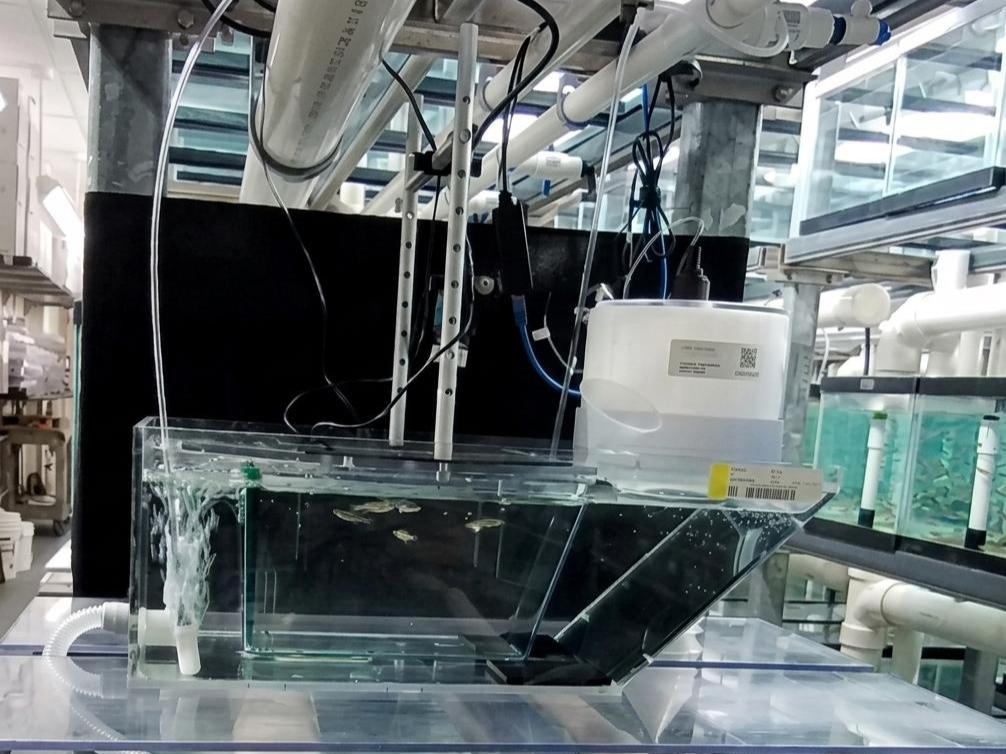
ZIRC, in Eugene, Oregon, is a centralized, worldwide repository of zebrafish genetic lines. It invests heavily in animal care across its 4,500-tank facility. CanaryTank has operated there continuously since 2023.
Optimal health and husbandry of zebrafish is critical
ZIRC maintains thousands of lines carrying genetic modifications that model human disease, or reporter constructs that mark cells and tissues. Many are unique. Like other large facilities, ZIRC monitors water quality through periodic sampling and checks sentinel populations by visual inspection and post-mortem assessment.
Current practices miss a lot of crucial data
Periodic sampling reveals critical health information too late for immediate action. Human error and technical limitations often make it difficult to maintain consistent and reliable monitoring in animal facilities. For example, out-of-range environmental data may go unnoticed due to uncalibrated equipment or alert system failures. Some parameters, such as nitrogenous waste, are checked infrequently despite their potential to harm fish. In addition, pathogens are often detected only after clinical symptoms appear, missing early behavioral warning signs.
CanaryTank 24/7 recording and behavior analysis
Recognizing that behavioral monitoring and timely behavior-based alerts are essential for animal health and
welfare, ZIRC started using a CanaryTank system in 2023 to continuously record and analyze the behavior of a
sentinel population. The system has been in continuous operation, day and night, ever since.
CanaryTank value to ZIRC: no events are missed, however brief
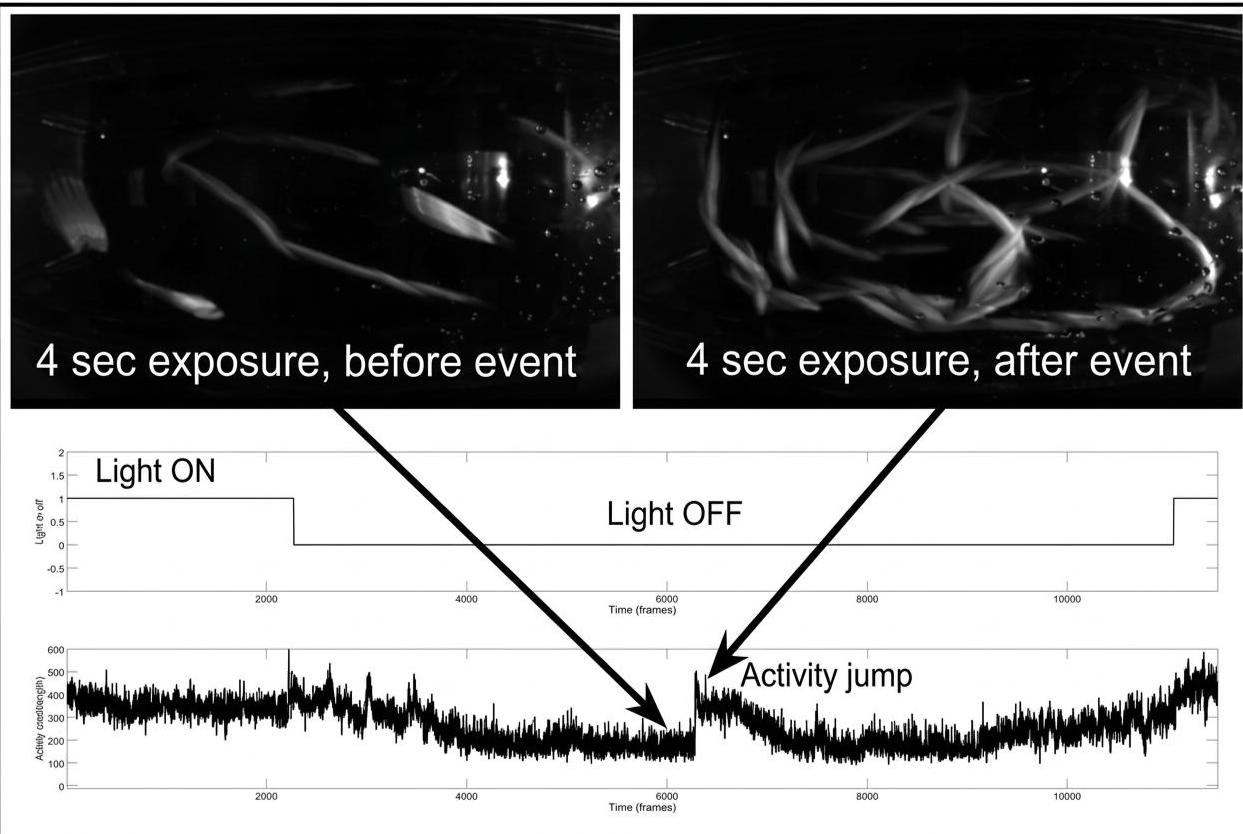
CanaryTank Remanent Imaging technology continuously records long-exposure images back to back. As a result, all transient events, some of which may be missed by video sampling or by periodic inspection, are captured. For example, as shown in the figure to the right, one night around midnight, CanaryTank recorded a sudden, brief jump in group activity. Replaying the images confirmed genuine fish motion, allowing ZIRC to look for a plausible explanation, for example, a door shutting loudly after someone accidentally entered the facility.
CanaryTank produces constantly growing sets of behavior data
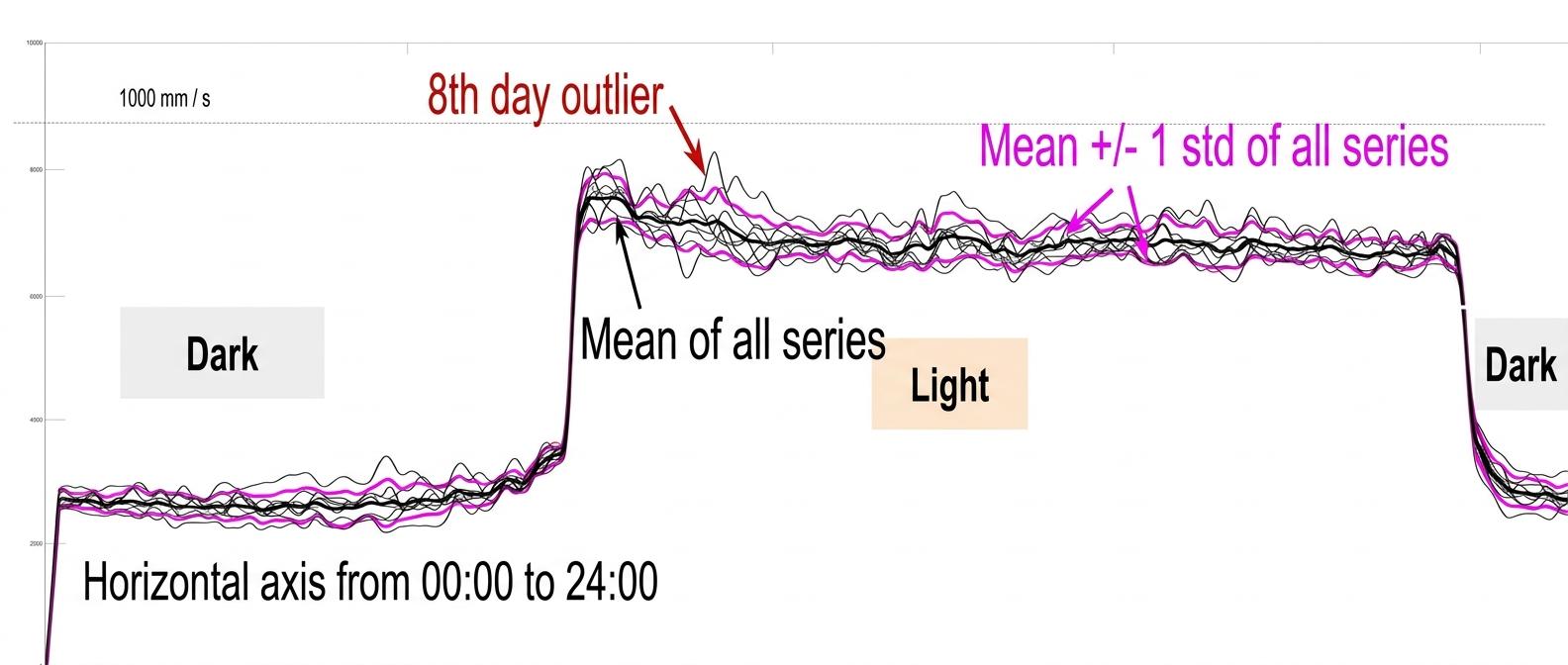
ZIRC is accumulating behavior data from each of its CanaryTank systems on a 24/7 basis, building robust baselines to enable a variety of comparisons.
Using these baselines, each day can be compared with other days close in time, or in previous years on the same date. Populations from different lineages or stocking densities can be compared with corresponding reference baselines, and outlier data can be flagged for further examination.
Behavior baselines can also be used for comparisons across facilities at different sites.
Could your facility benefit?
We would be glad to show you the ZIRC data and discuss your facility.